Robotic Prostatectomy for Prostate Cancer
What is Robotic Prostatectomy?
Robotic prostatectomy is a minimally invasive operation to remove the prostate for the treatment of prostate cancer. Robotic technology allows the surgeon to operate with highly magnified 3D vision and precise control through small incisions.
Compared with traditional open surgery, robotic prostatectomy can reduce blood loss and postoperative pain and allow faster recovery. The operation aims to achieve effective cancer control while preserving urinary continence and erectile function wherever this can be safely achieved.
The robot does not perform the operation independently. It is a sophisticated surgical tool controlled entirely by the surgeon. The experience and training of the surgeon remain important factors in planning surgery and achieving the best possible outcome.
See How Robotic Prostate Surgery Works
This video demonstrates how robot-assisted radical prostatectomy is performed for prostate cancer.
Why Robotic Prostatectomy?
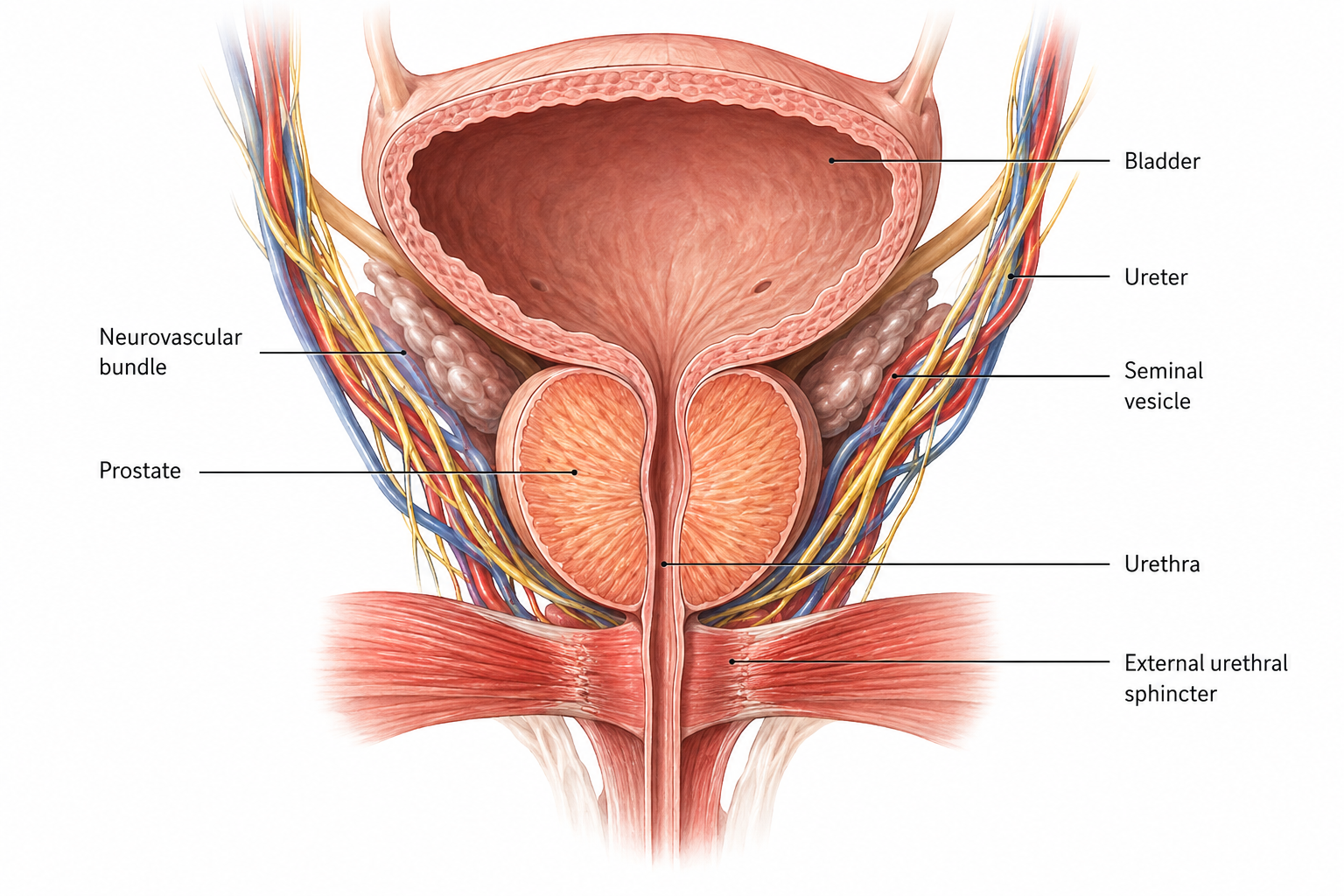
Robotic prostatectomy allows prostate cancer surgery to be performed through small incisions while giving the surgeon a highly magnified view of the prostate and the delicate structures surrounding it.
For suitable patients, potential advantages of the robotic approach include less blood loss, smaller incisions, less postoperative discomfort and a faster return to normal activities compared with traditional open surgery.
Importantly, robotic prostatectomy is about more than simply removing the prostate. Careful surgical technique aims to achieve three important goals:

Am I suitable for Robotic Prostatectomy?
Robotic prostatectomy is an established treatment option for men with localised and some locally advanced prostate cancers, but surgery is not necessarily the best treatment for every man.
The decision between surgery, radiation treatment and active surveillance depends on the characteristics of the cancer as well as your age, general health and personal priorities.
Simon will review your PSA, prostate MRI, biopsy results and staging investigations and discuss the advantages and disadvantages of each treatment option with you.


Experience Matters in Robotic Prostate Surgery
Robotic prostatectomy is a technically demanding operation. The robot provides excellent vision and precision, but every part of the operation is performed and controlled by the surgeon.
Research has shown an association between greater surgical volume and improved outcomes after radical prostatectomy. For a man considering surgery, many factors — including the biology of his cancer and his anatomy — cannot be changed. Choosing an appropriately trained and experienced surgeon is one important part of the treatment pathway that he can influence.
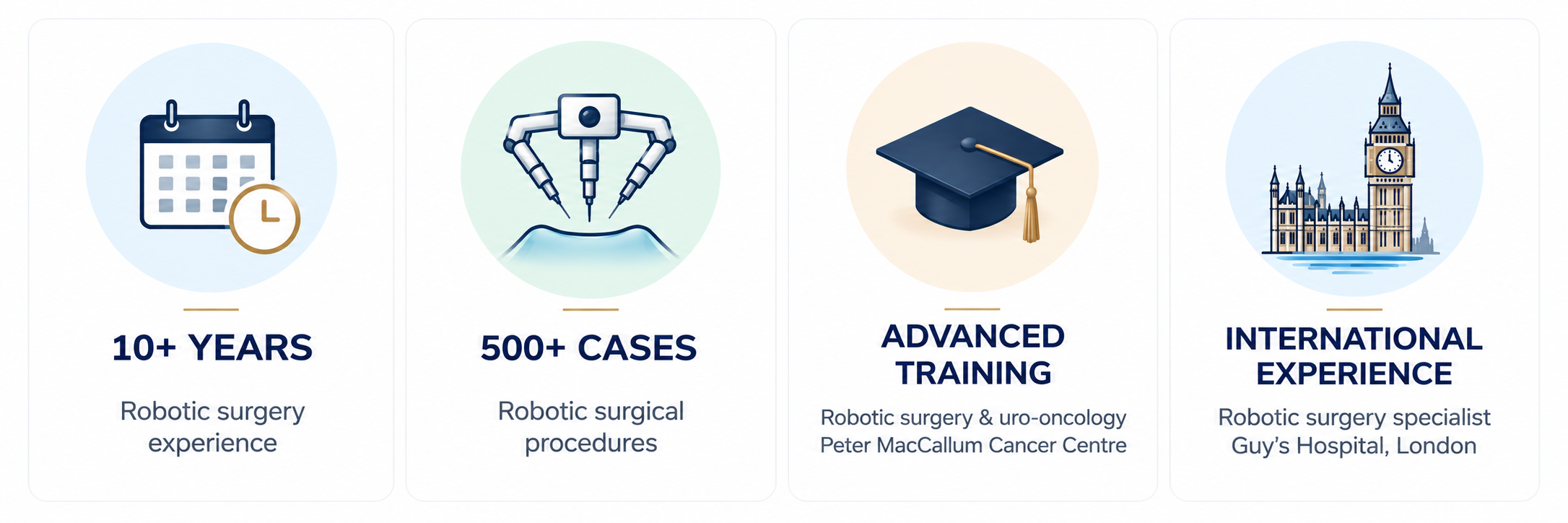
Simon has performed robotic surgery for more than 10 years and has completed over 500 robotic surgical cases. His training includes advanced robotic and uro-oncology training at Peter MacCallum Cancer Centre in Melbourne, followed by robotic surgical experience at Guy's Hospital in London.

Most men spend one to two days in hospital after robotic prostatectomy, go home with a urinary catheter for approximately one week, and are encouraged to walk and resume light daily activities soon after surgery. Heavy lifting is generally avoided for four weeks.
Continence and Erectile Function After Robotic Prostatectomy
Urinary continence
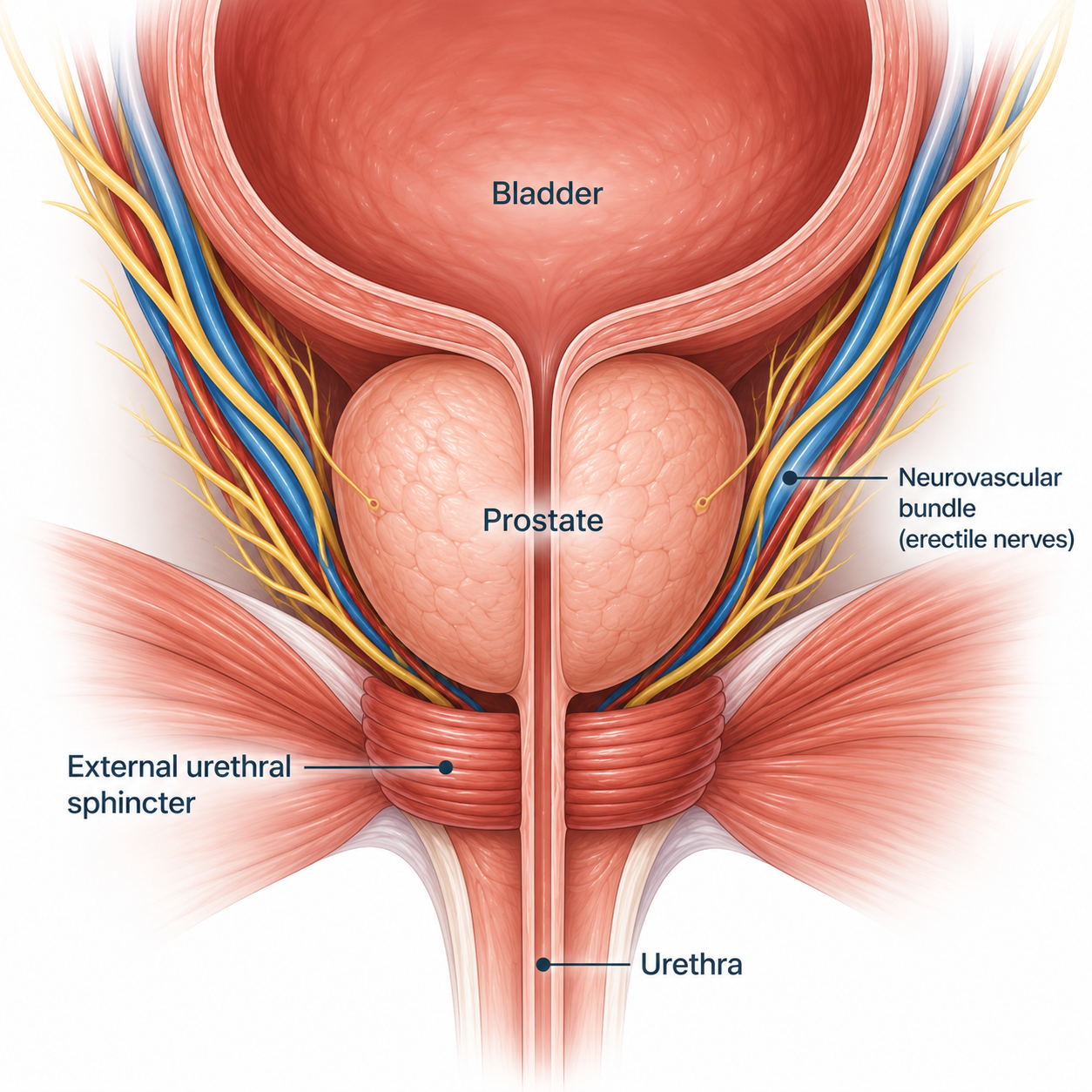
Some urinary leakage is expected when the catheter is first removed. Continence usually improves during recovery. Preserving the urethral length, external urinary sphincter and its supporting structures is an important part of prostatectomy, and pelvic floor physiotherapy forms part of your recovery.
Erectile function
The nerves responsible for erections run immediately alongside the prostate. Where the position and extent of the cancer allow, nerve-sparing surgery aims to preserve these delicate neurovascular bundles. The decision to preserve nerves must always be balanced against the primary goal of completely treating the cancer.
Recovery is individual. Age, erectile function before surgery, cancer characteristics, anatomy and the extent to which nerve-sparing is appropriate all influence functional recovery.
Risks and Possible Complications
-
Urinary leakage is common initially after catheter removal. Erectile function may also be reduced following surgery, particularly during the early recovery period. These often improve with time, although recovery varies between individuals. -
As with any operation, risks include bleeding, infection, blood clots and complications related to anaesthesia. -
These can include narrowing or scarring of the urinary connection, lymphocele following lymph-node removal, injury to surrounding structures, or the need for further procedures. -
Some men experience persistent urinary incontinence or erectile dysfunction after prostatectomy. Treatments are available if these problems persist.
Frequently Asked Questions
-
Most men stay in hospital for one to two days after robotic prostatectomy. You will be encouraged to get up and walk soon after surgery and can usually return to normal light daily activities relatively quickly.
-
A urinary catheter is usually required for approximately one week after robotic prostatectomy while the new connection between the bladder and urethra heals. Our dedicated nursing team will provide advice and support while the catheter is in place and arrange its removal.
-
Walking and normal light daily activities are encouraged soon after surgery. Return to work and driving depends on your individual recovery and type of work. Heavy lifting and strenuous exercise should generally be avoided for around four weeks. Simon and the nursing and physiotherapy teams will provide advice tailored to your recovery.
-
Some urinary leakage is expected when the catheter is first removed and usually improves as the urinary sphincter recovers. Pelvic floor exercises and physiotherapy are an important part of recovery. Continence outcomes vary depending on factors including age, pre-operative urinary function, anatomy and surgical factors.
-
Erectile function can be affected by prostate cancer surgery because the nerves responsible for erections run immediately alongside the prostate. Where it is safe from a cancer perspective, nerve-sparing robotic prostatectomy aims to preserve these nerves. Recovery varies considerably and depends on factors including age, erectile function before surgery, cancer location and whether nerve-sparing surgery is appropriate.
-
The nerves important for erections form delicate bundles that run very close to either side of the prostate. During nerve-sparing prostatectomy, the surgeon carefully separates and preserves one or both of these neurovascular bundles where this can be done safely. Cancer control remains the first priority, so the extent of nerve preservation is tailored to the location and characteristics of each man's cancer.
-
Robotic prostatectomy is a technically demanding operation. The robot provides excellent vision and precision, but the surgeon controls and performs every part of the operation. Published research has found an association between higher surgical volume and improved outcomes following radical prostatectomy, although volume alone does not guarantee an individual patient's outcome.
Simon has performed robotic surgery for more than 10 years and has completed over 500 robotic surgical cases, with advanced robotic and uro-oncology training at Peter MacCallum Cancer Centre in Melbourne and further robotic surgical experience at Guy's Hospital in London.
-
Robotic prostatectomy is one of several options for managing prostate cancer. Depending on the type, grade, stage and location of the cancer, alternatives may include active surveillance, radiation therapy, stereotactic radiotherapy (SBRT/CyberKnife), focal therapies such as NanoKnife (irreversible electroporation or IRE) or HIFU, and hormone-based treatments for some prostate cancers.
The most appropriate treatment depends on your PSA, prostate MRI and biopsy results, age, general health and personal priorities. Simon will discuss the advantages and disadvantages of the different options and whether surgery or a non-surgical treatment may be more appropriate.